**If you use on-line ordering for pick up, delivery or both – which do you use – have you ever compared the price and benefits
At least annually I do a cost benefit analysis –
Full Disclosure: We have Safeway-Fresh Pass, and BJ’s + Same Day Delivery because that is the best deal for these retailers. (based on how often we normally use Delivery and the costs / markups if we ordered through Instacart for these two retailers) Amazon Prime for those limited times when there is a good price on certain items we use on a regular basis and are not in need of refrigeration.
Also Instacart because it offers many easy price comparisons. It also allows us to choose an occasional order from other stores with higher minimum orders not cost justified by their direct ordering platforms.
We rarely if ever order prepared food from restaurant or fast food, but that will change once Smokey’s get completely set up.
Some if not all of the KBS/Keepez/other Bread Machine include a “Stir Fry” menu.
KBS “Stir Fry” notes: The comment I read but cannot find at the moment was something like seemed to be an odd feature: Me: Not so much odd as not very effective. Bread Machines evolved from Rice Makers.
The Stir Fry menu setting is, in theory, supposed to allow you to, well, stir fry the ingredients for a stir fry entree. I suspect because it does not get hot enough, it does not seem to do a good job.
This includes the protein aka “Meat Floss“, which, in many stir fry recipes is a shredded meat. “Meat Floss” is Chinglish (translated from Mandarin to something related to English) for shredded meat.
I have not tried (if you do, let us know how it worked) but have thought it MIGHT be useful to par-cook/soften veggies to be added to the dough. Par-cooking is something I do larger batches and then freeze in recipe portioned sizes for our mostly two person home. Again NOT something I tried because their are better tools and methods.
This is a work in progress, so I welcome ALL comments and suggestions, among other things, I need to find a freely available link to the User Manual.
Reminder: Hell will freeze over before I use delayed start in my personal use of any thing other than the Coffee Maker.
I STRONGLY recommend you read thru at least once before you start, as I prefer to make notes “as I go”
I try to work with the least common denominator for most directions, so for recipes, that usually means Ounces & Minutes then at the end convert back a measurement in final draft, i.e. 1 hour = 60 min or 10 ounces = 1.25 Cup(s)
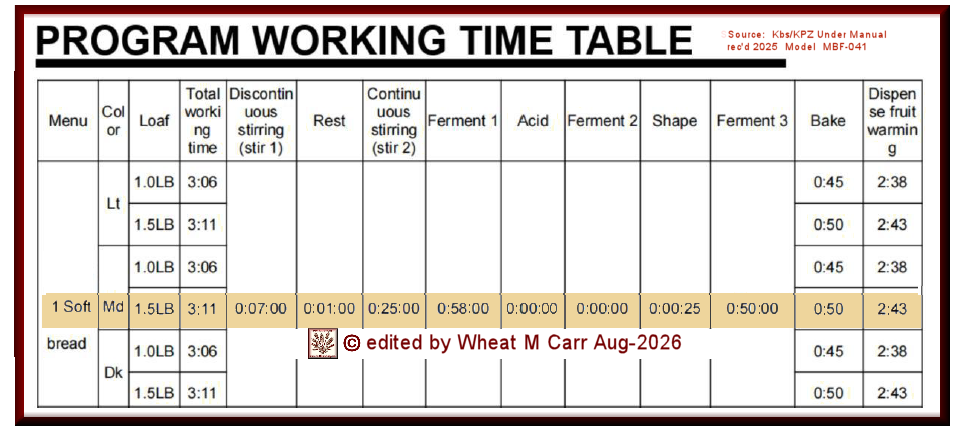
KBS/Keepeez User Manual Model MBR-041 page 28 Settings: Menu: 1 (Soft/Basic/) Color: MD (Medium) Loaf: 1.5 lb Total…Time: 3H:11M Medium Crust, H/h = Hour(s) M/m = Minutes ONE (1) Hour = 60 minutes.
“Total Working Time” Convert 3h:11m – 191m
In Menu 1 – END of SHAPE BEFORE START of FERMENT 3.
The best time to remove the paddle is the END of the SHAPE BEFORE the start of the FINAL Ferment note: if you open the image in a new tab it will expand to a much lager image, so easier to read.
Please keep in mind that many things may affect the time shown on the display. It just happens, accept it and plan to be “around” on average about 5-10 minutes BEFORE the expected time.
To determine WHEN the time is:
CHANGE Total time to MINUTES: 3h:06m = 3 x 60 + 6 = 191 minutes
SUBTRACT “Bake Time” 191m – 50m = 142m
SUBTRACT “FERMENT 3” 142m – 50m = 92m
At 92, you should be at the end of the SHAPE.
CONVERT 92m to H:M 92-60 – 1h 32m
Reminder, KBS/KEEPEZ are “count down” so display will show approximately 92 minutes OR 1:32 (1h 32m)
SIDE NOTE: This is also, in my experience/opinion, ALSO the best time to make any swirl for inclusions
Again this is a draft and I do very much welcome your comments and suggests to make it easier for you to use.
This method is SOLELY base on the various charts produce by the manufacturer and my personal experience.
This method contains to affiliate links as of 2026-Aug-01
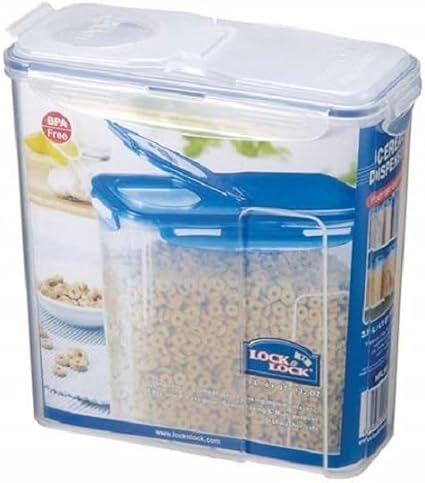
FLOUR & Other Dry Storage: My “system” currently uses some “lock tight” Containers intended for Cereal, but that hold a 5 lb bag of Flour. This started when I was still able to manage the Fresh Milled Flour process so I could break up the steps that allowed me to fit it into my version(s) of 10-20-30 minutes bits as my work and family time allowed.
To see the closest match I could find, this is an affiliate link, but it is used for illustration in this case. I bought mine from ALDI years ago and you may also find them locally at a better price, https://amzn.to/4v5J79R edited 2026-08-01: This size, with a little effort, will hold a 5 lb bag of flour.
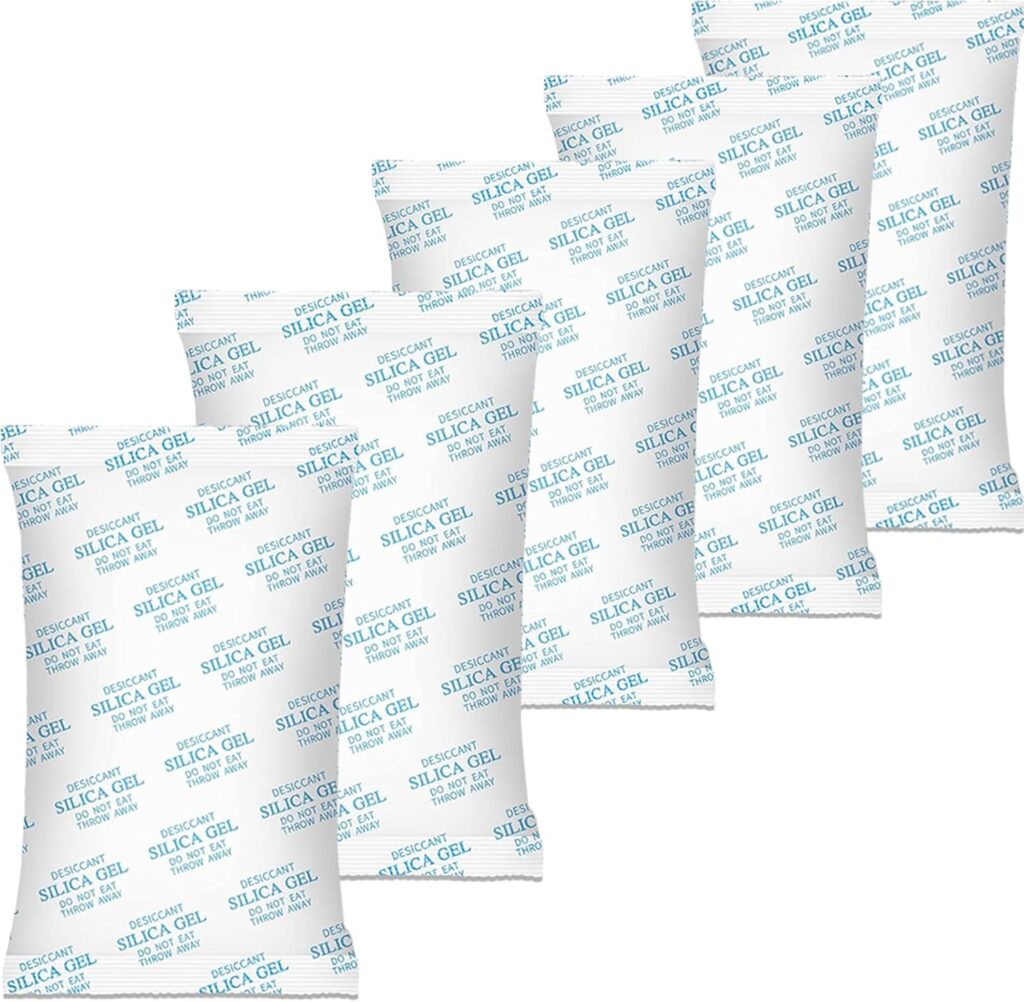
Humidity & Moisture Control: Every few years I buy a 10 or so pack of 50 gram Moisture Absorbers. When you live an area subject to humidity and other weather related issues, and your apartment is only 700 square feet, ideal storage is NOT Always available. I also keep & use reuse a supplie of 5g, 10g, and 20g for use the dry herbs & spices I buy in bulk – small for the “daily use” bottles and the larger as needed for the “back up storage” And, yes, in those 1 lb bags of dry yeast too. ncidentally EVERY Dry Ingredient and the mixes I make up in advance all are stored in air tight containers with Moisture absorbers.
I leave Flour, sugar, rice in their bag, put the bag, place it into the the Air Tight containers along with appropriately sized Moisture Absorbers. This habit means I pretty much never has to worry about humidity. Since barometric pressure is out side my control, I don’t bake on “weather headache” days. Combining air tight containers with moisture absorbers and a dedicated selected size dry measure
o see the closest match I could find, this is an affiliate link, but it is used for illustration in this case. https://amzn.to/4bLoWqe
Last but not least, each container has a “dedicated” dry measure cup in the size most often needed. the exception is flours used in breads. those has two, a one (1) cup & a half (1/2) cup. Vital Wheat gluten has a eighth (1/8) cup. These stay in that container so ALL measuring from that ingredient is consistent.
Bulk yeast has the spoon that came with the KBS/Keepeez bread machine. Again, consistent measuring.
This also means less cleanup most of the time. Measure the dry ingredient into a pan or bowl, and back into the container for next time.
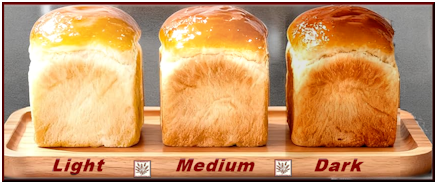
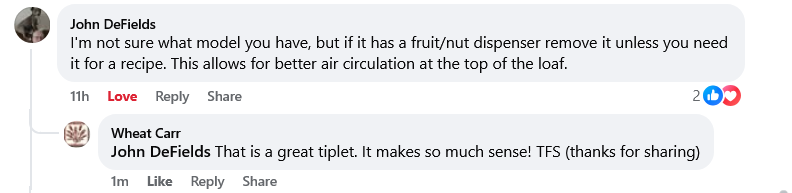
In response to a question about how to get a darker top crust, in 2026/Jan/04 John DeFields wrote: (Thanks to John for permission to share )
“I’m not sure what model you have, but if it has a fruit/nut dispenser remove it unless you need it for a recipe. This allows for better air circulation at the top of the loaf.”
Note: Sample Loaves were egg-washed to enhance appearance